THE GIST
An era of relentless refinement has given us an “optimised” world.
Everything can be optimised… your morning routine, your productivity system, your Pilates form. There’s a correct way to stretch, a correct way to wake up, a correct way to build a personal brand. Somewhere along the way, creating something got tangled up with making it impressive.
Creative paralysis creeps in between the thing you imagined and the thing you made. You look at what you’ve produced, compare it to what lives in your head, or worse, to what someone else made and you stop. Just until you’re better.
But “until you’re better” has a funny way of becoming never.
There’s a specific name for this feeling, and it’s not writer’s block or burnout or lack of inspiration. Ira Glass called it the taste gap; that maddening stretch of time when your taste is more developed than your ability, when you know exactly what good looks like and can see, with painful clarity, that what you’re making isn’t it yet.
When you decide in advance that something is allowed to be bad, you remove the thing that’s actually stopping you, which was never lack of talent, and never lack of time. It was the stakes. The silent, suffocating weight of needing what you make to be good before you’ve even made it. Making ugly things on purpose is how you pick the lock.
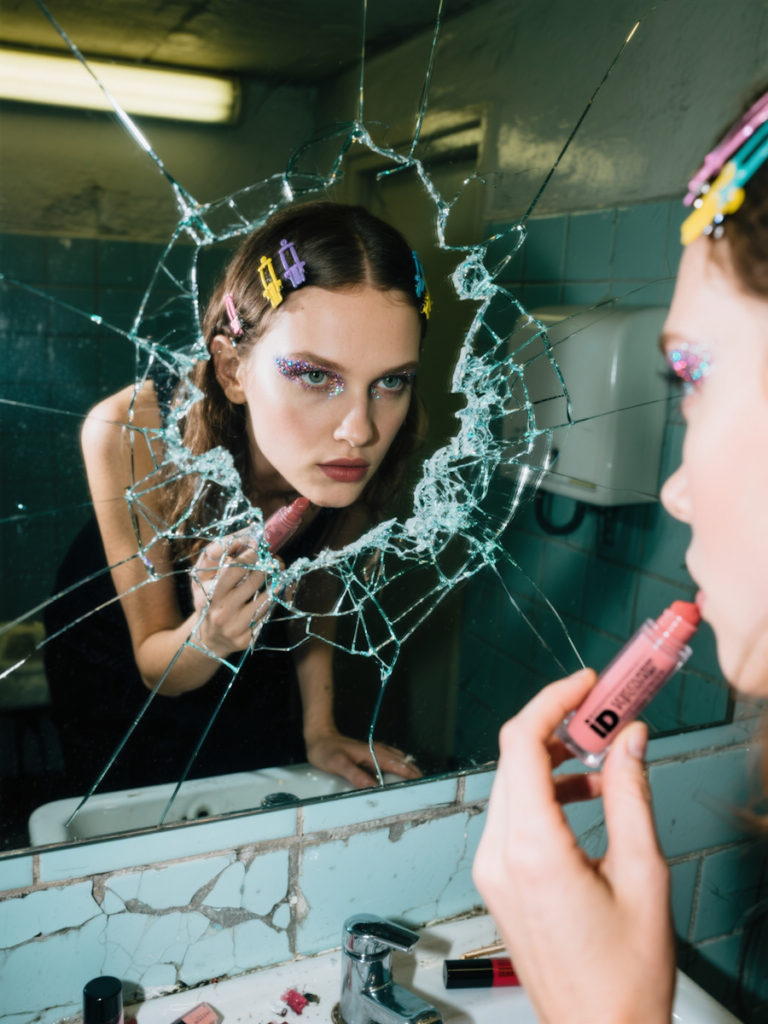
Why we need a creative recovery plan
Because stopping feels so reasonable in the moment. Why put something out into the world before it’s ready?
But creative muscles work exactly like real ones. Rest them too long and they don’t stay preserved, they atrophy. The longer you wait to start again, the more foreign the whole thing feels, and the higher the bar in your head climbs. The recovery plan is about interrupting that cycle before the pause becomes permanent.
So what does “making ugly things” actually look like?
The good news is it doesn’t require a sabbatical, a studio, or a complete personality overhaul. It just requires starting somewhere with the explicit understanding that what you make doesn’t have to be good. Here are some ways in, ranging from “I can do this today” to “I need to rearrange my life a little”:
Low commitment, high creative return
- Write something nobody will read: a messy first paragraph, a voice-note monologue, a scene with no plot and no purpose
- Make a “bad version” on purpose: the ugly logo, the chaotic collage, the off-key melody
- Set a ridiculous constraint: six sentences only, black ink only, 10 minutes only, no backspace allowed
- Redesign something ordinary: a grocery list, a receipt, your to-do list; as if it were a poster
- Take one of your old pieces and deliberately ruin it. Stretch it. Distort it. Rewrite it from the villain’s perspective.
Slightly more commitment, proportionally more interesting
- Start a 30-day “ugly series” where the only rule is speed over polish
- Recreate a piece you love from memory instead of reference
- Collaborate with someone whose style clashes with yours
- Build a tiny project around a theme you think you’re “not qualified” to explore
- Share something at 80% done and let the discomfort stretch you
- Do the project you’ve labeled “when I’m better”
THE SIGN-OFF
The irony is that the work you’re most proud of probably wouldn’t exist without a graveyard of things you’d rather forget. Making ugly things on purpose is simply deciding that the graveyard is part of the garden. So if you’re stuck, aim for evidence. Evidence that you showed up, you tried and that you’re still in the game.